

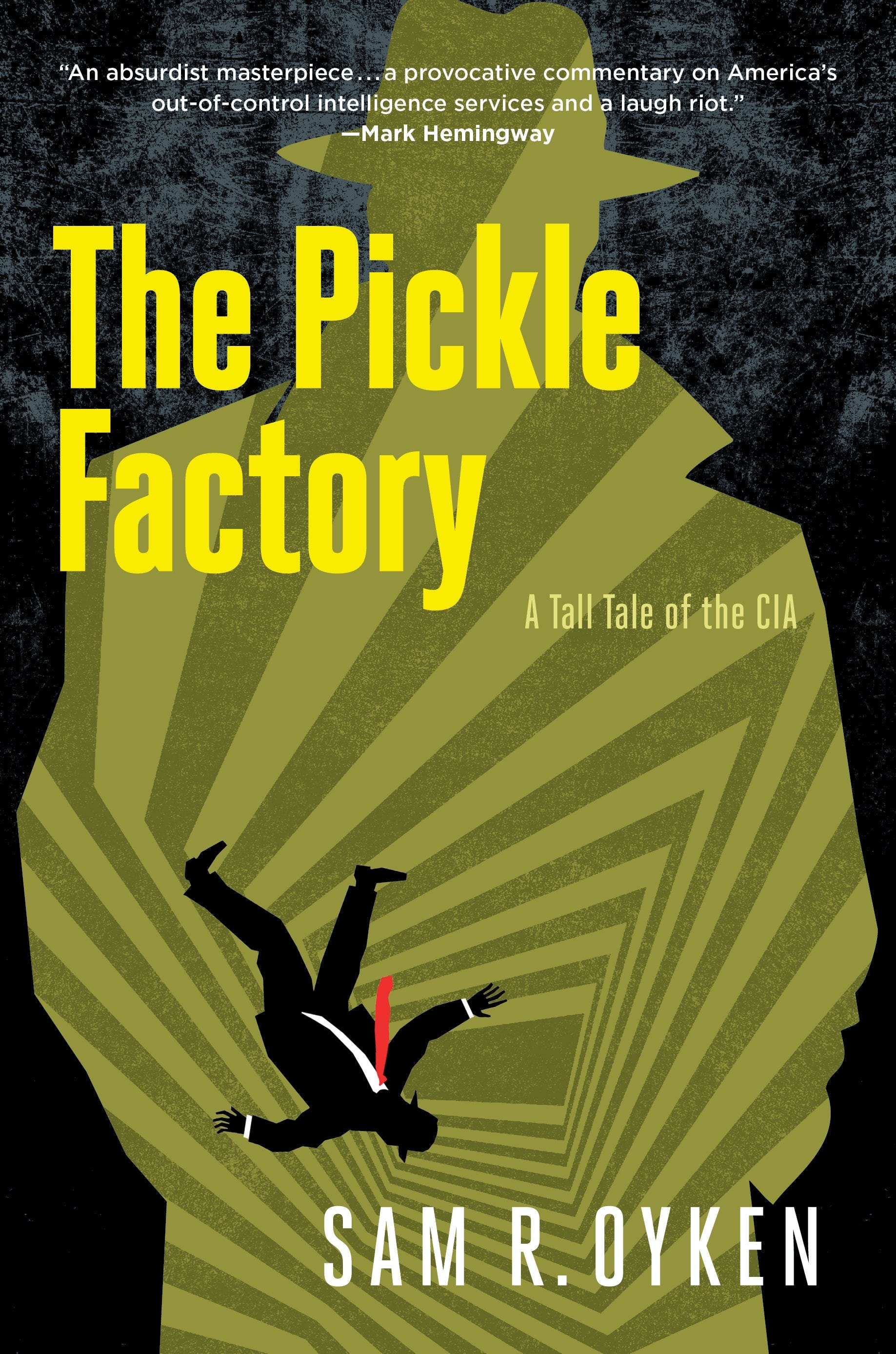
Imagine a whimsical peek behind the curtain at the CIA in the style of Mike Judge’s Office Space, where the main character is slowly red-pilled as to the true nature of the Agency’s work, and what he can do to subvert it. This book is less about the plot and more about the comedic observations of the narrator as he escorts the reader through the belly of the beast.
The Story
Our main character, who goes by the pseudonym KRAY, is recruited by his boss at the CIA to implement a new initiative called GOOWIKI. What does it do? Well, on paper, it aims to established Human Resources departments in institutions all around the world, but like most things the Agency does, it’s shrouded in misfit acronyms and nomenclature meant to disguise its true purpose.
In this case, KRAY’s real objective is to scrape as much money as he can from a new federal bill that basically floods the government with new funds. His boss tells him to burn through cash for GOOWIKI so they’ll get an even bigger budget next time, which leads to an all-out-palooza of spending on just about everything…except for spies.
In the middle of all this, the CIA fails to prevent a terrorist attack, which leads to some uncomfortable questions. The agency needs a fall guy, and KRAY draws the short straw, just as he figures out what’s really going on. From there he needs to be competent enough to survive yet foolhardy enough to blend in, until he can figure out what to do next…
The Characters
The comparison to Office Space or The Office or any other white-collar comedy is primarily the result of the characters. They’re all mostly two-dimensional but in this case that’s a good thing, because they’re personifications of what readers think the Agency is. KRAY stands out by virtue of being the protagonist, and also because he has the least-weird pseudonym out of everyone we meet.
On that note, reading The Pickle Factory in print was a little difficult simply because the CIA pseudonyms are written in all caps, and there are several of them per page. They hit the eye like a flyswatter at first; for me it took some getting used to. But before long you’ll settle into the feel of it, and you’ll distinguish them from each other. KRAY is a semi-bachelor in his mid-40s, and his girlfriend KANDINSKY also works for the CIA. BUTTONFLY is a mentor/ally to KRAY and looks out for him when things go sideways, and on the other end of the spectrum you’ve got FILBERT and EVERSHAG. The names are just this side of comedic, but they feel more like a fly buzzing around in your brain, which seems indicative of how Oyken generally wants the reader to feel about the Agency.
The most on-the-nose name was that of the main antagonist, P. Richard Wacker, who goes by Dick. In fairness, Oyken acknowledged the most obvious jokes he could make with that name, but didn’t overdo it.
The World
Maybe The Pickle Factory is an accurate representation of the CIA or maybe it is all bombast and bullcrap, but either way Oyken made it feel like our world and even tied several major political deaths to Agency action. Naturally JFK comes up, but even obscure hits like Sonny Bono—who was “taken out by a spring-loaded coconut tree while skiing in Nevada in ‘98”—make the grade.
The internecine machinations of the Agency do reflect real-world in-groups, such as when Oyken describes (in detail) how the Marine Mafia, the Catholic Mafia, the Black Mafia, the Mormon Mafia, and several other insulation “Mafias” compete with each other for power inside the CIA. It’s our world for sure, just viewed through a very sarcastic lens.
Or is it…
Politics
For the most part the politics skew right-wing, but it isn’t written as a right-wing fantasy explanation for all the world’s woes. It’s definitely critical of government waste, and how federal jobs really just amount to adult babysitting with salaries in the high six-figures.
Content Warning
Rated R for language, which is sparing but intense. Some sensual scenes and a couple of violent scenes.
Who is it for?
I know Dave Barry has written novels, and that they don’t always stack up compared to his decades of humor columns, but this book really felt like Dave Barry writing a long chain of columns with a through-line about the CIA.
Why buy it
If you’ve ever wanted to “open the kimono” and see just how ridiculous the workings of the intelligence community can be, The Pickle Factory is for you. It’s funny, it’s absurd, the ending is just optimistic enough—and maybe even realistic enough—to give you hope that the institution can be salvaged.