

After editing one of Sean Rowland’s Nightingale series, he had mentioned online that he had difficulties securing reviews. Obviously, I had a solution. I said send them. All of them. After all, I enjoyed Nightingale book three,1 it was basically all of the good parts of Star Trek and the good part of Firefly rolled together. I figured if he sent his oeuvre, our reviews would definitely have fun.
Rowland sent only one: The Operators - Monster Makers.
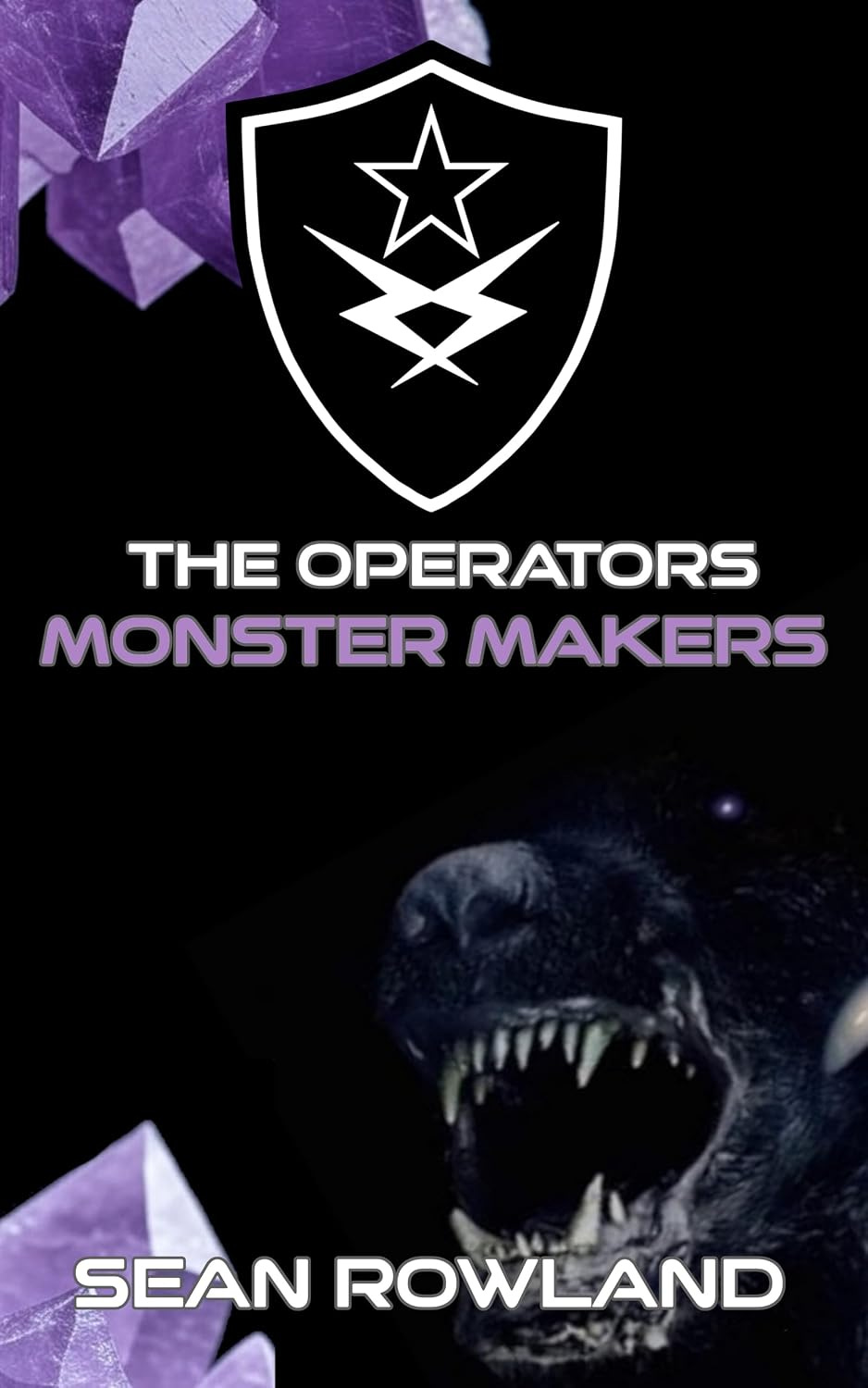
The Story
I’m going to do something I usually don’t do, and directly cite the flap copy.
The Department of SuperHuman Activities observes and polices the superpowered community in the United States. Though cooperation and open dialogue, the DSHA ensures the safety of superhumans and the public in general. Only during emergencies that regular law enforcement aren’t equipped or trained to handle do they send in their emergency response team, the Operators. Led by Major Peter Hicks, the Hunter, and composed of superhumans from all over America, the Operators handle threats that others can’t.
When people are killed in a series of strange animal attacks, the Operators are called to New Mexico to investigate. There, they discover a factory where monsters are made by an underground society of scientists and terrorists bent on world domination. The Operators are hard pressed to stop these monster makers in a war where safety is an illusion and not everyone will come out alive. Still, facing threats like this is their job, and it’s time to get to work.
Now, if you choose to read this book, hold onto that description, because Rowland expects you to remember that going into the book, and doesn’t fully elaborate upon what the Operators or DSHA are until about halfway through the book— where Rowland is still introducing characters.
The Operators - Monster Makers opens with monsters killing a bunch of naval seamen. Superheroes on the government payroll (part time) are called in to investigate, seek, and destroy the source of the problem.
This leads to the source of the problem: a military order that is genetically engineering monsters and superpowers, in order to bring in a New World Order. They’re called the Heirs of Humanity, and they are unstoppable because there will always be more of them. Sound familiar?
If you haven’t caught on, this is just the Avengers, only joined together under a military umbrella. No, not SHIELD, more like straight up American SpecOps.
Rowland sent The Operators - Monster Makers to Upstream because it was his first book. And I think most people could tell while reading it. The two halves of this book look like two different books. The first half is pure action—no time to explain, just hang on for the ride. It’s very Golden comic book. The writing is pretty much on par with Flash Gordon serials.
The weakness comes when the action slows down. Rowland uses the 80s trope of “villainous organization attacks our team while they’re off the books,”2 spurring on the second half of the novel. Sandwiched between these two halves is an attempt to give our heroes personal lives and backstory so we care when they are under threat. It does not work. One female character is given a “wife,” which made me roll my eyes.3 One character is literally introduced and given enough backstory and screentime so the reader can feel sorry when she’s killed, and try to give Hicks a character moment.
Also, try to have a good memory. because when we go from dealing with these characters in civilian life to fight scenes, they switch from real names to code names with little to no warning. There are some character deaths where I just said, “Who?”
Does any of this make the book bad? Nah. I mean, Hell, I still watch serials with Buster Crabbe as Flash Gordon, and I’ll read Golden Age comic books. Overall, I would say this was a fun little book. The prose is workmanlike and serviceable. The action pieces are generally well executed and they don’t overstay their welcome. If you turn your brain off for the first half of the book and just roll with it, there are some fun action set pieces, and a few good ideas throughout.
But like Buster Crabbe in Flash Gordon serials, this could use at least one more rewrite.
The Characters
Thankfully, this is a plot-driven novel, and character doesn’t matter. In fact, the weak points of Monster Makers is when Rowland tries to give these operators character.
Major Peter Hicks is basically Rick Flag from Suicide Squad, only he’s managing Avengers. He’s married and he has powered armor strong enough to keep him alive in during superpowered beatdowns. This is the entirety of his character. Attempts to give him more depth fail.
“Talon” is one of the more frequent characters on the page. She heals quickly, has metal claws, and after taking enough damage and going deep enough into combat rage, she becomes feral. She is also supposed to be an MD. So, she’s basically Michelle Rodriguez playing Wolverine with a medical degree.
And there’s and ersatz Colussus, and Wonder Woman, and Iron Man.
The World
It’s a world with superheroes. They’re basically just accepted. Move on. Nothing to see here.
Politics
None.
Content Warning
Like I said, it’s a Golden Age comic book. Not a lot of issues.
Who is it for?
If you like simple, straightforward, fun little Golden age superhero comics, you’ll enjoy this one.
Why buy it
“Avengers as run by the US military” should probably be a tagline for the series.
I don’t have to have read all of them to edit them.
The most obviously example of this is probably Lethal Weapon 2.
My issue? Operators are perhaps one percent of the population? LGBBQ is maybe 3% of the population? The odds of those overlapping on the Venn diagram are slim.